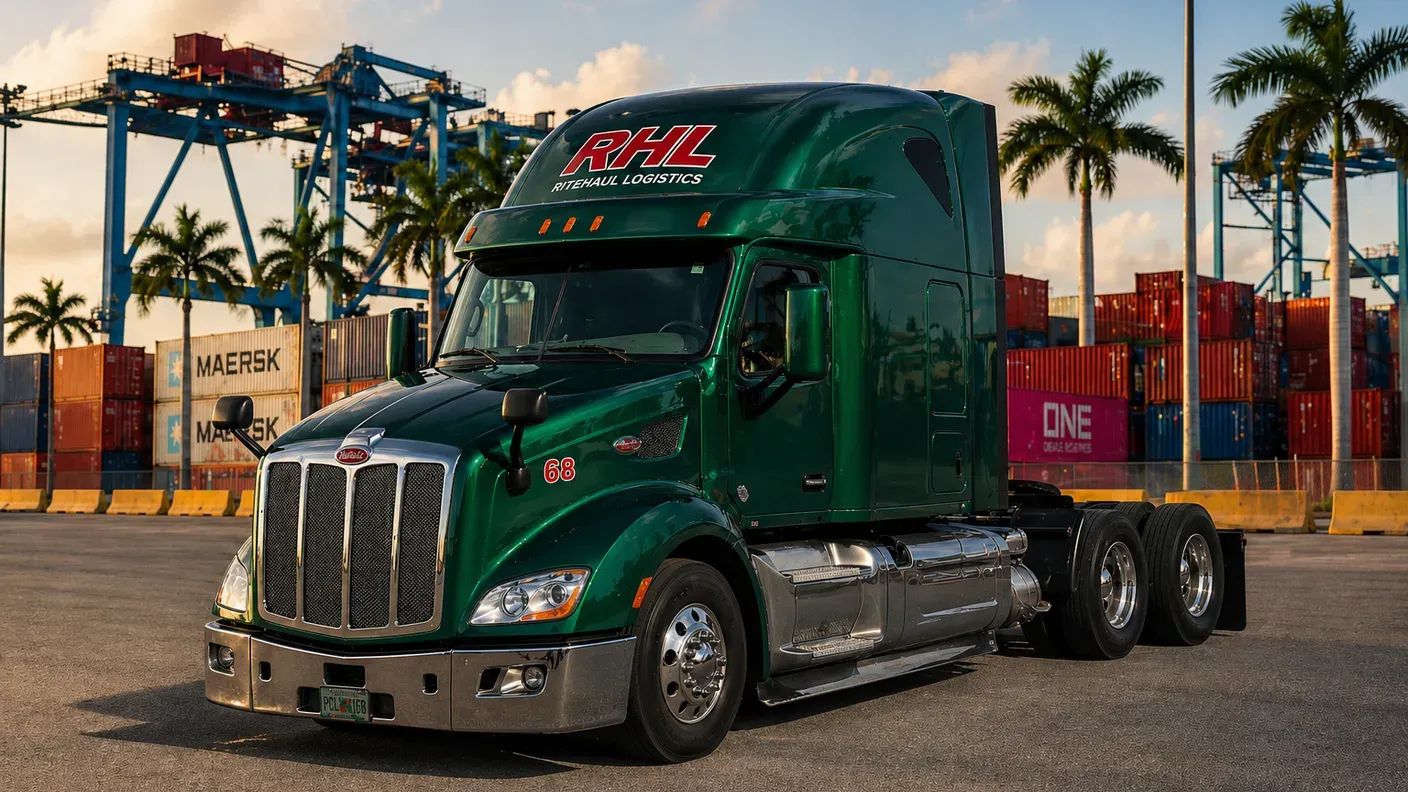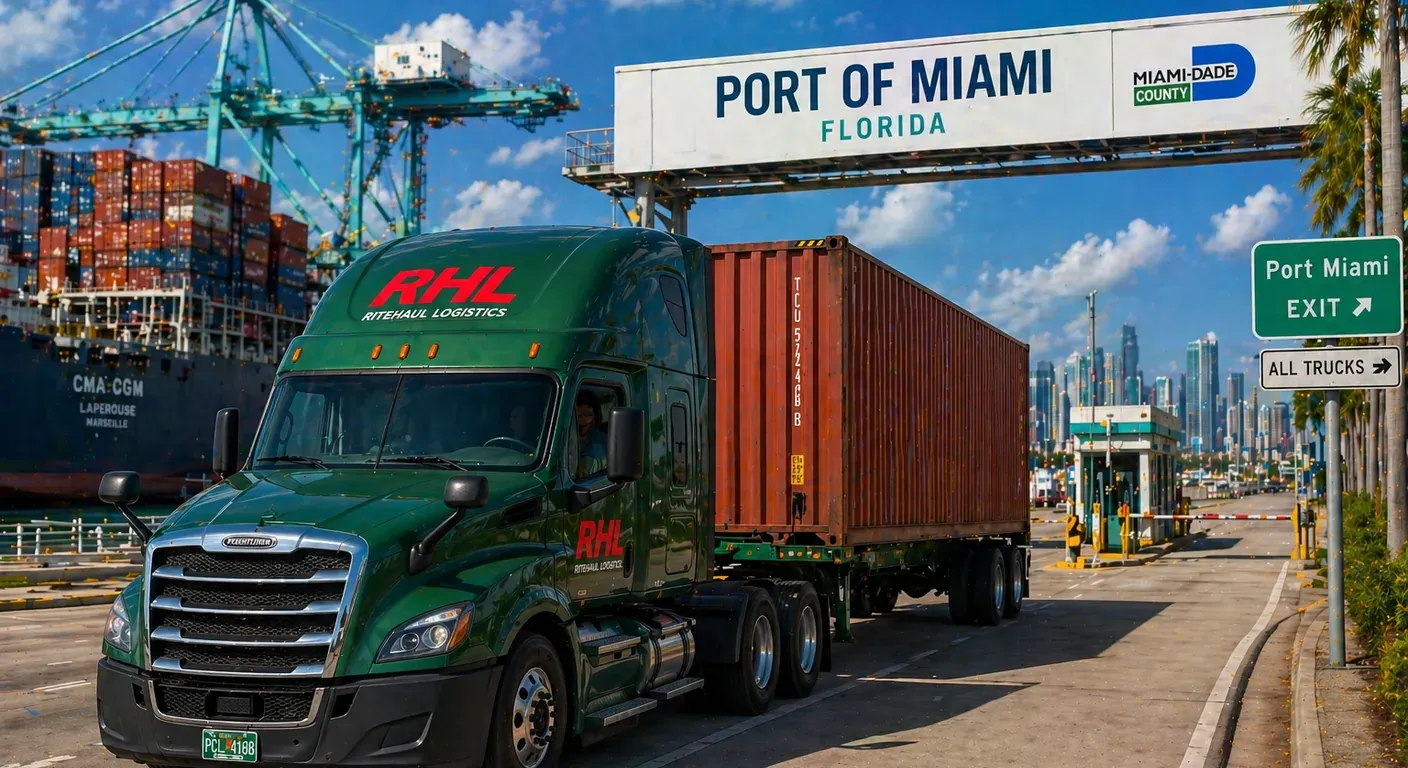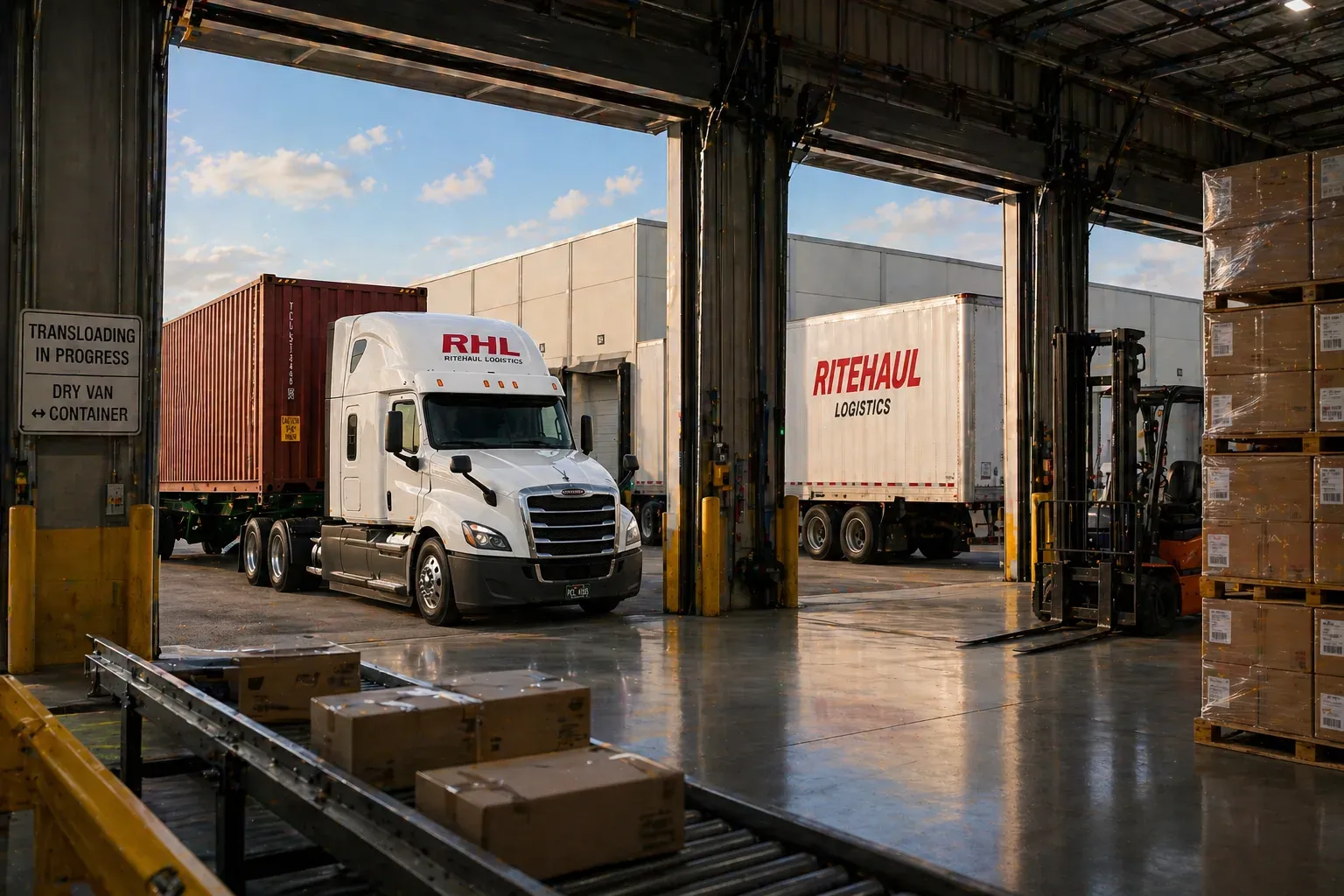
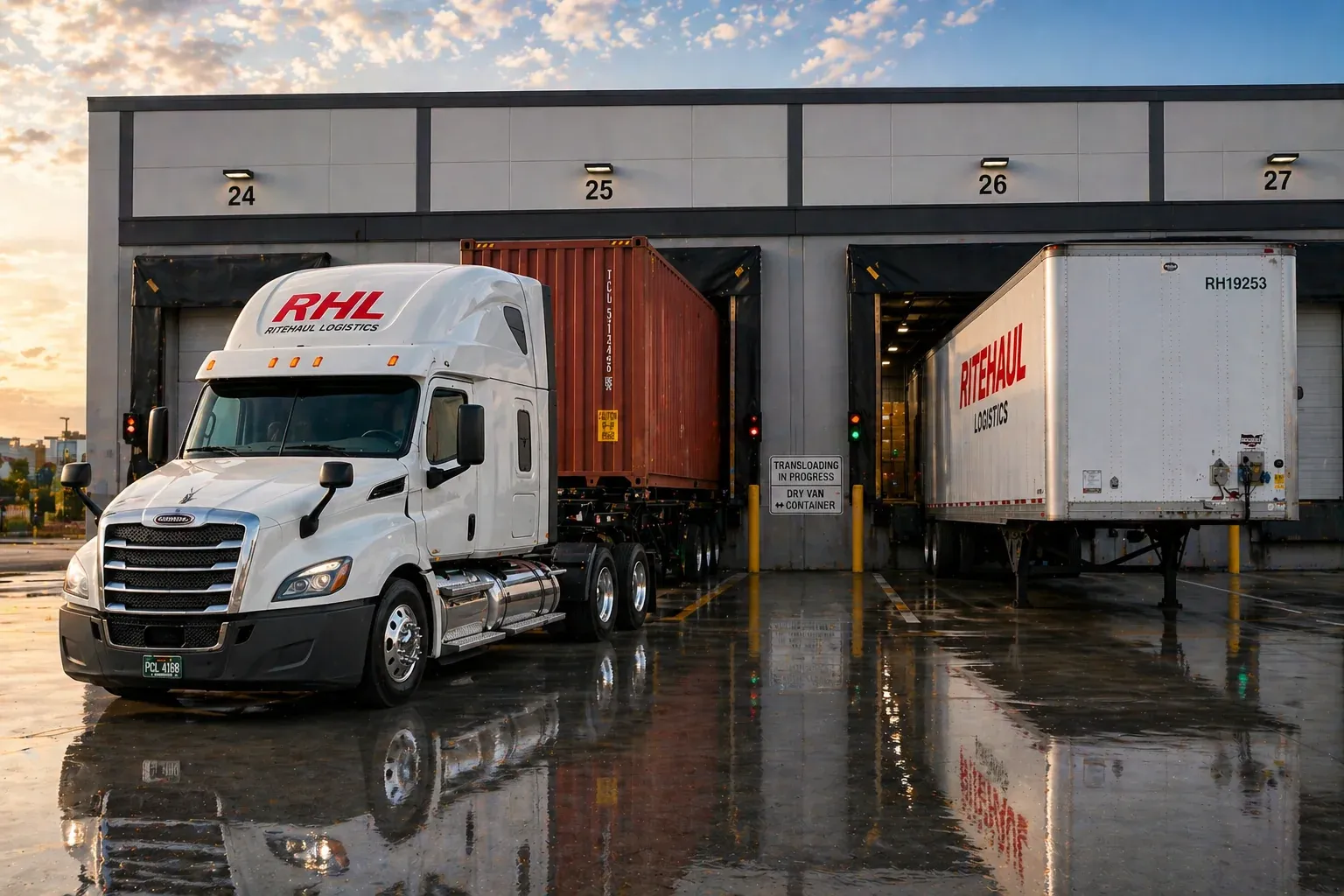
Transloading is one of those services that almost every importer has heard of and very few have actually priced out. People sometimes confuse it with cross-docking, sometimes with warehousing, and almost always assume it is more expensive than it is. The reality is that on the right lane, transloading saves real money — sometimes thousands of dollars per container — and on the wrong lane it just adds a handling step nobody needed.
This article walks through what transloading actually is, the three scenarios where it pays for itself, when to skip it, and what to look for in a partner if you decide it is worth a try.
What transloading actually means
Transloading is the physical transfer of cargo from one transportation conveyance to another. In the ocean-import world that almost always means moving palletized or floor-loaded freight out of a 20-foot or 40-foot ocean container and into a 53-foot domestic trailer, an intermodal box, or a smaller LTL trailer for last-mile distribution.
The container stays at the transload facility. The cargo continues. The chassis goes back to the pool, the empty container goes back to the port, and the importer's per diem clock stops.
That last point is the entire reason transloading exists.
When transloading pays for itself
There are three classic scenarios where transloading is the obviously right choice. If your freight fits any of them, you are probably leaving money on the table by drayaging straight to door.
1. You are about to rack up demurrage or per diem
The moment a steamship line marks your container "available" at Port Miami or Port Everglades, the demurrage and per diem clock starts. Free time is short — typically two to five days at the terminal and another three to five days on the chassis once you pick it up. Miss it, and you are paying somewhere between $150 and $350 per container per day, often per occurrence rather than per business day.
Transloading near the port lets you get the container off the chassis the same day you pick it up. The empty goes back to the port within hours, the chassis returns to the pool, and the cargo waits in your warehouse, on your terms, with no clock running.
For importers in distress on free time — the kind of week where five containers all become available on a Friday afternoon and nobody is in the receiving office until Monday — that one decision can save more than the cost of the transload itself.
2. The inland linehaul is long enough to favor a 53-foot trailer
A 40-foot ocean container holds roughly 2,350 cubic feet of usable cargo space. A 53-foot domestic trailer holds about 3,500. That is a 30 to 35 percent improvement in cube per move. On a long inland leg — say, Miami to Atlanta or Miami to Dallas — that means roughly three ocean containers can fit into two domestic trailers.
If your over-the-road or intermodal rate is being quoted per trailer rather than per pound, transloading can cut your inland linehaul bill by a third. Even after the transload labor and the additional handling, the math usually wins on any move over about 400 miles.
3. You need to deconsolidate, palletize, or sort before final delivery
Some importers receive floor-loaded containers from overseas and need them palletized, shrink-wrapped, and sorted by destination before they go to a retail DC or fulfillment center. Doing that work at the consignee's loading dock is slow, ties up trailers, and frequently triggers detention. Doing it at a transload facility is what the facility is built for.
This is also where pick-and-pack, value-added labelling, and freight consolidation start to overlap with transloading and slide into 3PL warehousing. The line is fuzzy on purpose — the right partner can do all of it under one roof.
When transloading is not worth it
Transloading is not free. There is labor, there is dock time, there is the small but real risk of damage every time cargo gets touched. If the math does not clear those costs, skip it.
The classic scenarios where transloading does not help:
- Short final-mile. If the consignee is 15 miles from the port, just dray it.
- Sealed, regulated, or in-bond cargo. Some commodities cannot be broken or transferred without breaking compliance. Pharmaceuticals, certain hazmat, and many bonded shipments are stuck on the original container.
- Single-piece oversize cargo. A piece of machinery on a flat-rack is not getting transloaded into a dry van. A 53-foot reefer with one giant crate is just an expensive way to move air.
- Customer-specific routing. If your customer requires sealed-container delivery to verify chain of custody, transloading defeats the point.
The decision is per-lane and per-SKU, not per-company. A profile of "transload everything" or "never transload" almost always misses the optimal answer.
What to look for in a transload partner
Once you have decided a lane belongs in a transload, the choice of partner determines whether the savings actually show up. The three things we tell prospective customers to look for:
- Proximity to the port. Every mile between the terminal and the transload facility is a mile of drayage you are still paying for. The whole point is to keep the empty turn fast. Our facility is roughly six miles from Port Miami and eight miles from Port Everglades, which is about as close as it gets in South Florida.
- Equipment match. A transload facility built for high-cube floor-loaded freight has dock-high doors, multiple forklifts, and a layout that lets a 40-foot box and a 53-foot trailer dock simultaneously. A cross-dock built around LTL parcels does not. Look at the floor plan, not the brochure.
- One operational owner. The cleanest transload operations are run by the same company that does the drayage. When the dispatcher pulling the container is in the same building as the dock supervisor, the empty turn happens on schedule. When they are not, every move requires a phone call and a chassis status check.
A practical example from our Miami yard
A typical week last quarter: an apparel importer brought in eight 40-foot containers of seasonal merchandise discharging at Port Miami over a Wednesday and Thursday. Their DC in Atlanta could only receive two trailers a day and was already booked through Monday.
Direct drayage would have meant paying per diem on six chassis through the weekend, plus probable demurrage on at least two containers that would not have cleared the terminal in time.
The transload version: all eight containers came to our yard the same day they were available, were unloaded into our floor space, and went out as five 53-foot domestic trailers across the following week — exactly matching the receiving DC's schedule. The customer paid for transload labor and short-term floor space, but saved roughly $4,200 in per diem and three trailers' worth of inland linehaul.
That is the kind of math we like running for new accounts. If you have a regular import lane through South Florida and have not priced a transload alternative recently, drop us a quote request and we will show you the numbers side by side.
Need a quote on a specific lane?
Tell us your origin port, destination, and equipment type. We will price it within one business day.
Stay informed
Get the next article in your inbox
Port closures, congestion, rate trends, and capacity updates for Port Miami and Port Everglades — delivered when we publish.