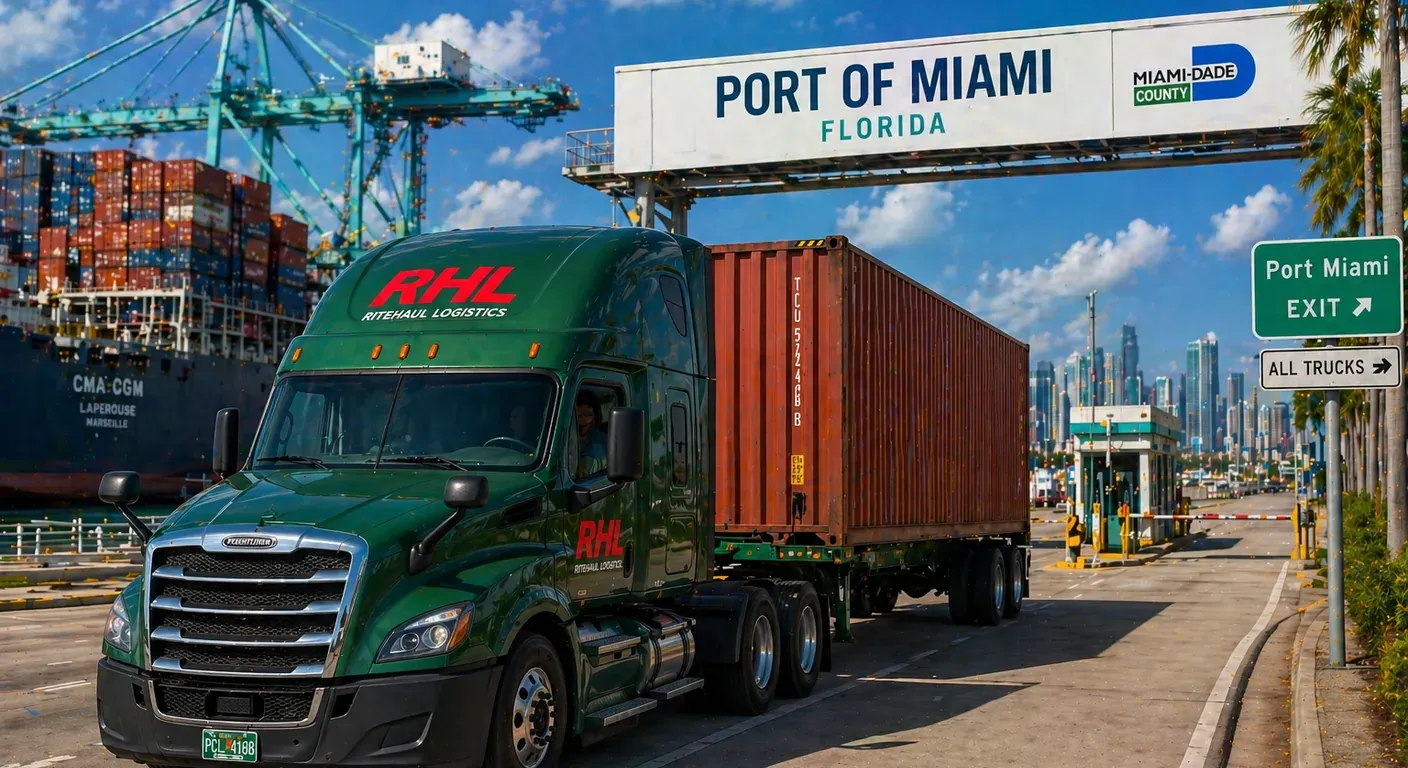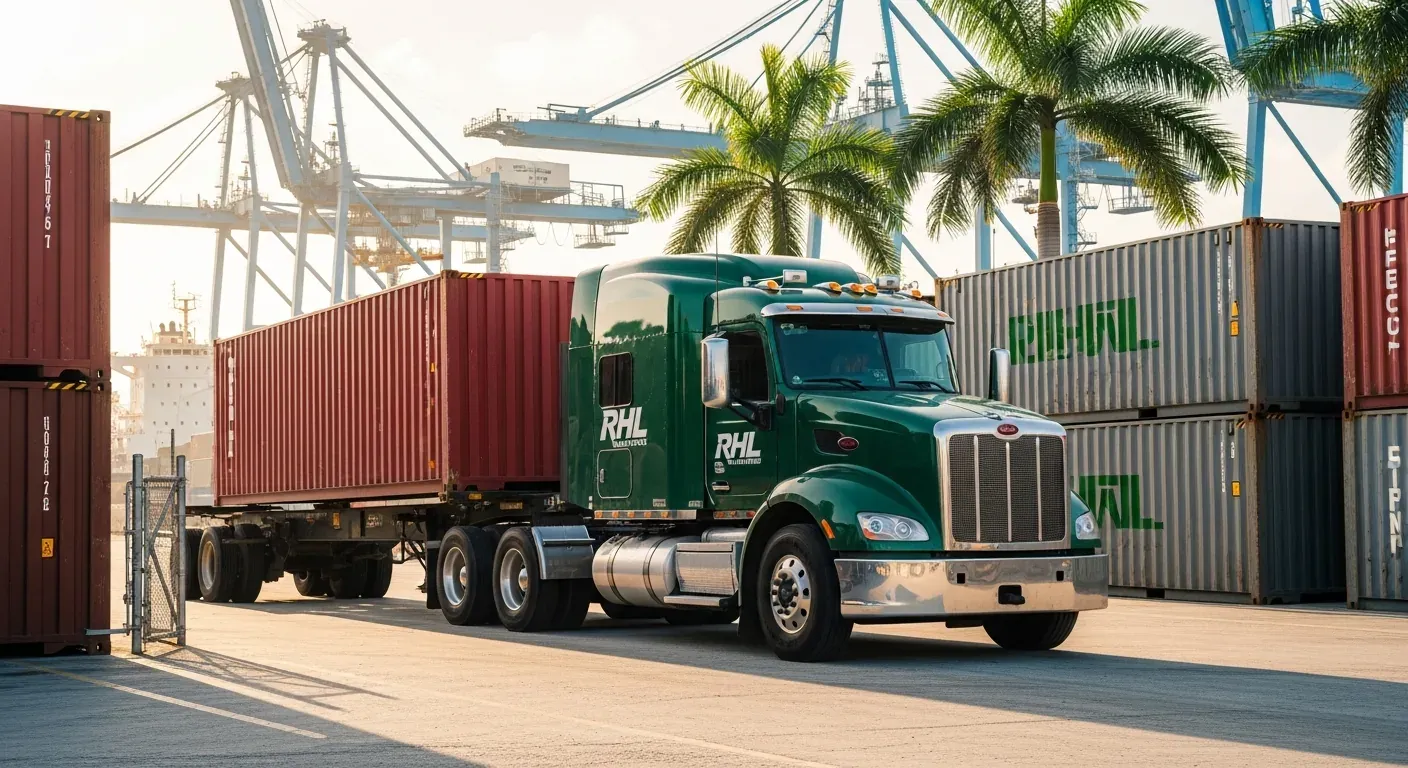
If you have moved a meaningful number of containers through Port Miami or Port Everglades, you have lived a chassis shortage. Maybe you did not know that is what it was. The container is "available," the appointment is set, the trucker is dispatched — and then somebody calls and tells you the box will not move today because there is no chassis under it. The container sits. Demurrage starts. Your customer asks why.
This post is the version of that conversation we wish we had with every new shipper before their first peak. What chassis shortages actually are, why they happen at the South Florida ports specifically, what they do to transit, and what an asset-based carrier like ours can actually do about them.
Why chassis shortages happen
In the United States, the chassis under your container is almost never owned by the same company that owns the container. Steamship lines exited the chassis-provisioning business years ago, and the equipment is now mostly run by third-party intermodal equipment providers. They lease their chassis into pools — the largest in the country are run by TRAC, FlexiVan, and DCLI — and your trucker draws from the pool when picking up your container.
That model works well when supply matches demand. It breaks the moment one of three things happens:
- A vessel discharge surge. Two ships hit the terminal in the same window and 1,800 containers all need chassis on the same morning.
- Slow turnaround at the consignee. Containers sit on chassis at warehouses for days waiting to be unloaded. Each one is a chassis that is not in the pool.
- A repair backlog. Chassis fail their routine inspection and pile up at the M&R shop. The pool shrinks even though demand has not changed.
Any of those will tighten supply. All three at once, which is what happens during peak season, will leave drivers circling the terminal with no equipment to pull.
What it looks like at Port Miami and Port Everglades
The South Florida ports have a few wrinkles that make them more chassis-sensitive than larger ports like Los Angeles or Savannah.
The first wrinkle is geography. Port Miami sits on a narrow island connected by a single tunnel and a single bridge to the mainland. Port Everglades is a peninsula. Neither has the deep, sprawling chassis storage yards that exist around the LA/Long Beach basin. When the pool runs short, there is no second pool down the road. The trucker either takes a bobtail back to Hialeah, or waits.
The second wrinkle is the chassis split. Port Miami runs primarily on the South Florida Chassis Pool. Port Everglades has its own pool dynamics. Chassis are not freely interchangeable across the two — even though the ports are 25 miles apart — so a surplus at one does not solve a shortage at the other.
The third wrinkle is the South Florida import mix. We move a lot of dense, heavy product — building materials, tile, marble slab, beverages — that requires triaxle or specialized chassis. When the standard 40-foot pool is fine but the triaxles are out, overweight cargo gets stuck even though the dashboard shows "chassis available."
In a normal week, none of this is visible. In peak season — typically September through November and again in March — it is the single biggest cause of missed transit times at both ports.
How shortages compound demurrage
A chassis shortage on its own would just be an annoyance. What makes it expensive is what happens to your free time while you wait.
Most steamship lines in South Florida give a container three to five business days of free time at the terminal. When you cannot pull a container because there is no chassis, the clock keeps running. The terminal does not care that the reason is structural. They charge by the day.
We have seen weeks where the average wait for a triaxle at Port Miami stretched to 36 hours. Ten containers waiting that long means roughly half of them blew their last day of free time. At $200-plus per container per day, you are looking at a four-figure problem that did not exist on Monday morning.
The cleanest defense is the obvious one: get the container off the chassis as soon as possible. That is exactly the case where a transload near the port earns its fee three times over.
What asset-based carriers can actually do
There is a difference between a brokerage that is dispatching whichever owner-operator is closest to the gate and an asset-based carrier that has been running South Florida ports for two decades. The brokerage is a phone call. The asset-based carrier is a list of relationships and a pre-positioned chassis fleet.
The things that actually move the needle when supply is tight:
- Owned chassis where it matters. We carry our own pool of chassis, including triaxles for heavy and overweight freight. When the public pool is empty, our drivers are not stuck.
- Pre-staged equipment near the gates. A driver who can swap chassis at our yard 10 minutes from the terminal can do two pulls in the time another driver does one.
- Dedicated dispatch on the inside. When you know the terminal supervisors and they know you, you find out about a chassis surge an hour before the public knows. That hour is everything.
- Yard space to absorb shocks. When the consignee cannot receive today, we can drop and pick at our yard, get the chassis back into the pool, and protect the next move.
None of that eliminates a chassis shortage. It mitigates the symptoms. The shipper who has built a relationship with an asset-based carrier feels a peak-season chassis shortage as a delay of a few hours. The shipper running spot drayage feels it as a delay of three days.
Strategies for shippers
If you import through South Florida regularly, there are a few things you can do on your side that meaningfully lower your exposure:
- Plan around the surge windows. Vessel arrival schedules at Port Miami and Port Everglades are public. If your contract allows, schedule pickups for the morning after the discharge wave, not the same afternoon.
- Move chassis turn time as a KPI, not an afterthought. Every extra day a container sits on a chassis at your DC is a chassis you took out of the pool. Set internal targets and track them.
- Use a transload for time-sensitive containers. Two hours of unload labor at our yard is cheaper than two days of demurrage.
- Consolidate carriers. When one carrier is moving most of your volume, they will prioritize you in a tight market. When you are spread across six brokers, you are everyone's last call.
If you would like to talk through your specific lanes — what is moving, when, and how much exposure you have to the next shortage — request a quote and we will start with a free operations review.
Need a quote on a specific lane?
Tell us your origin port, destination, and equipment type. We will price it within one business day.
Stay informed
Get the next article in your inbox
Port closures, congestion, rate trends, and capacity updates for Port Miami and Port Everglades — delivered when we publish.