If you import containers into the United States, you have probably heard the words "drayage" and "intermodal" used as if they meant the same thing. They do not, and confusing them is one of the most expensive mistakes a logistics team can make. The right choice depends on geography, volume, time sensitivity, and how forgiving your customer is when transit slips by a few days.
This guide explains what each one actually is, when to use which, and how a South Florida importer in particular should think about the trade-off.
What drayage actually is
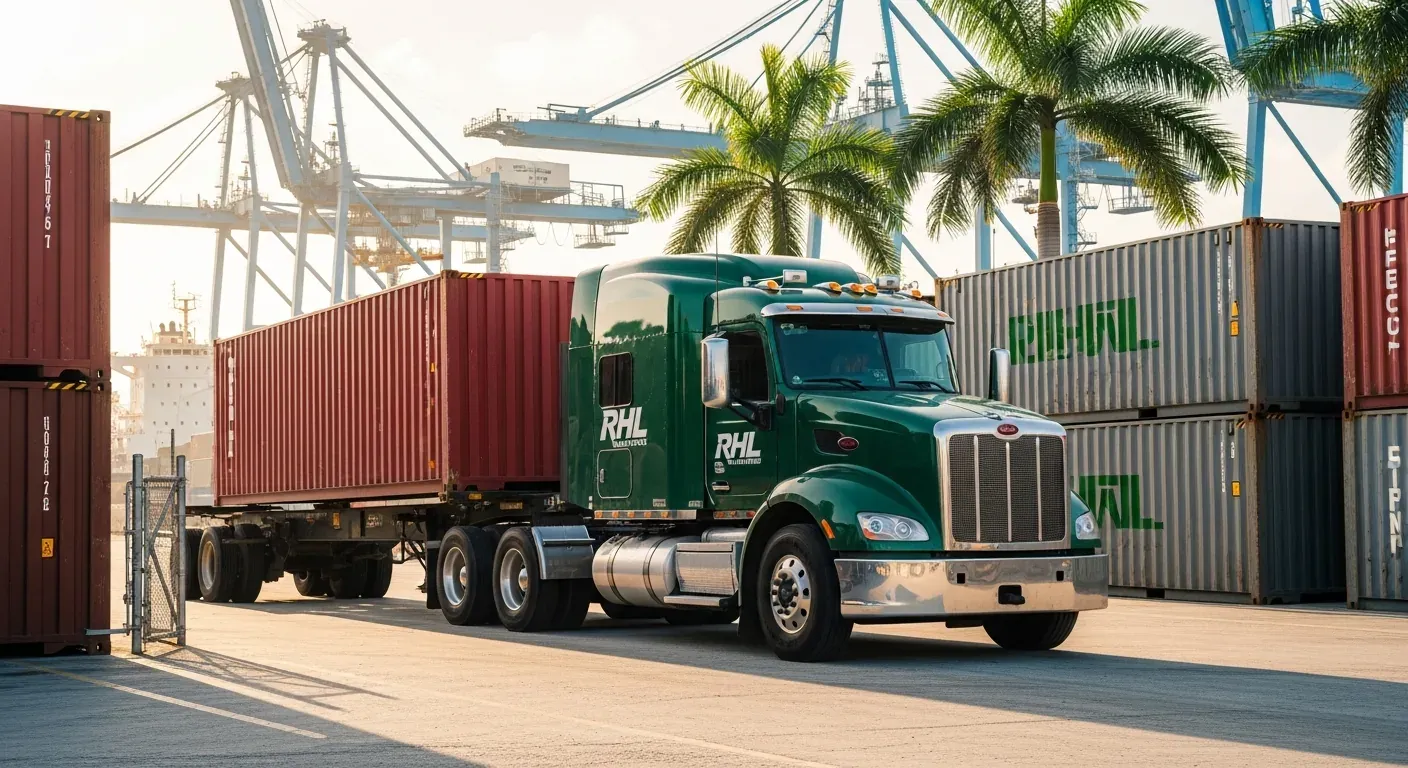
Drayage is the short-haul truck movement of an ocean container, almost always on a chassis, between a marine terminal, a railhead, a warehouse, or a customer's door. The name is old — it comes from the horse-drawn drays that used to move freight off the docks in the nineteenth century — but the job is essentially the same. A driver pulls into the terminal, picks up a sealed container, and runs it to a nearby destination.
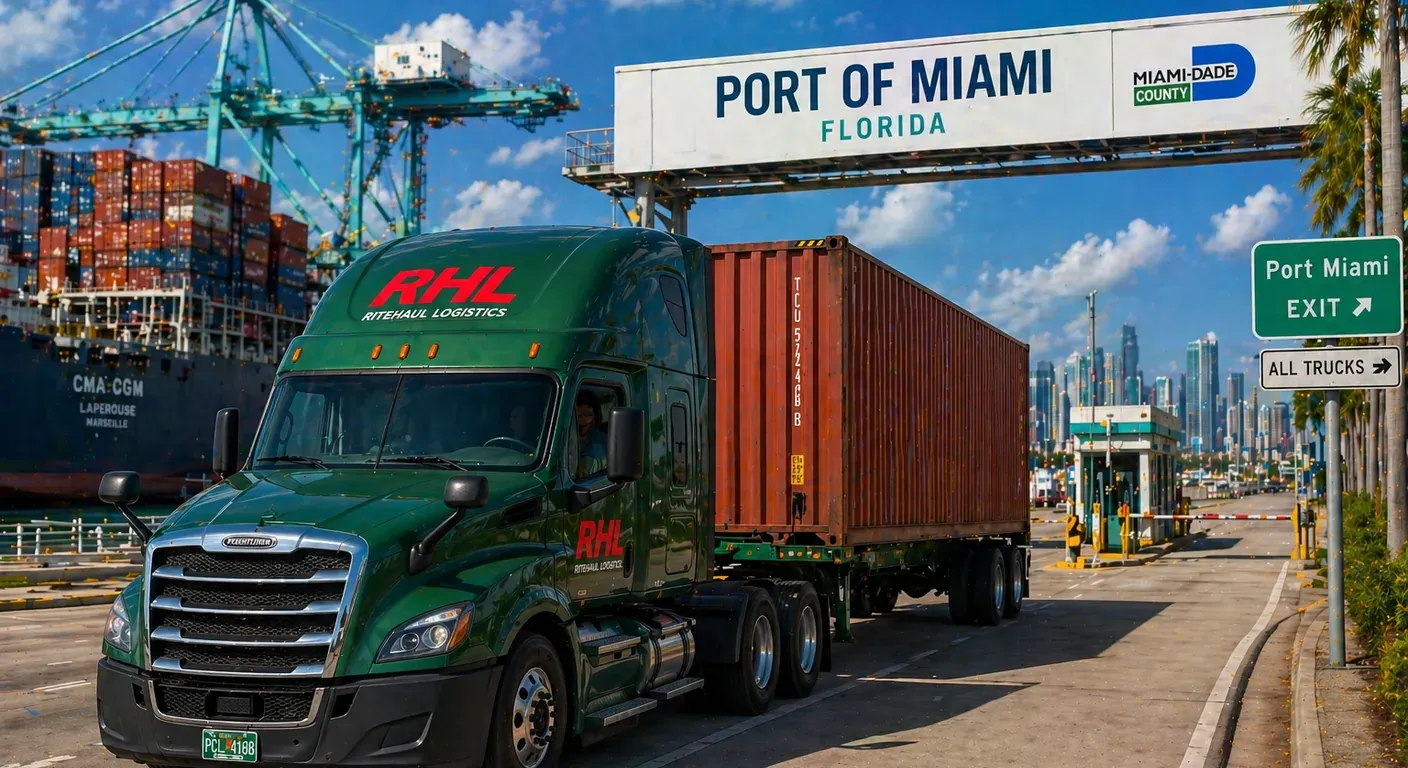
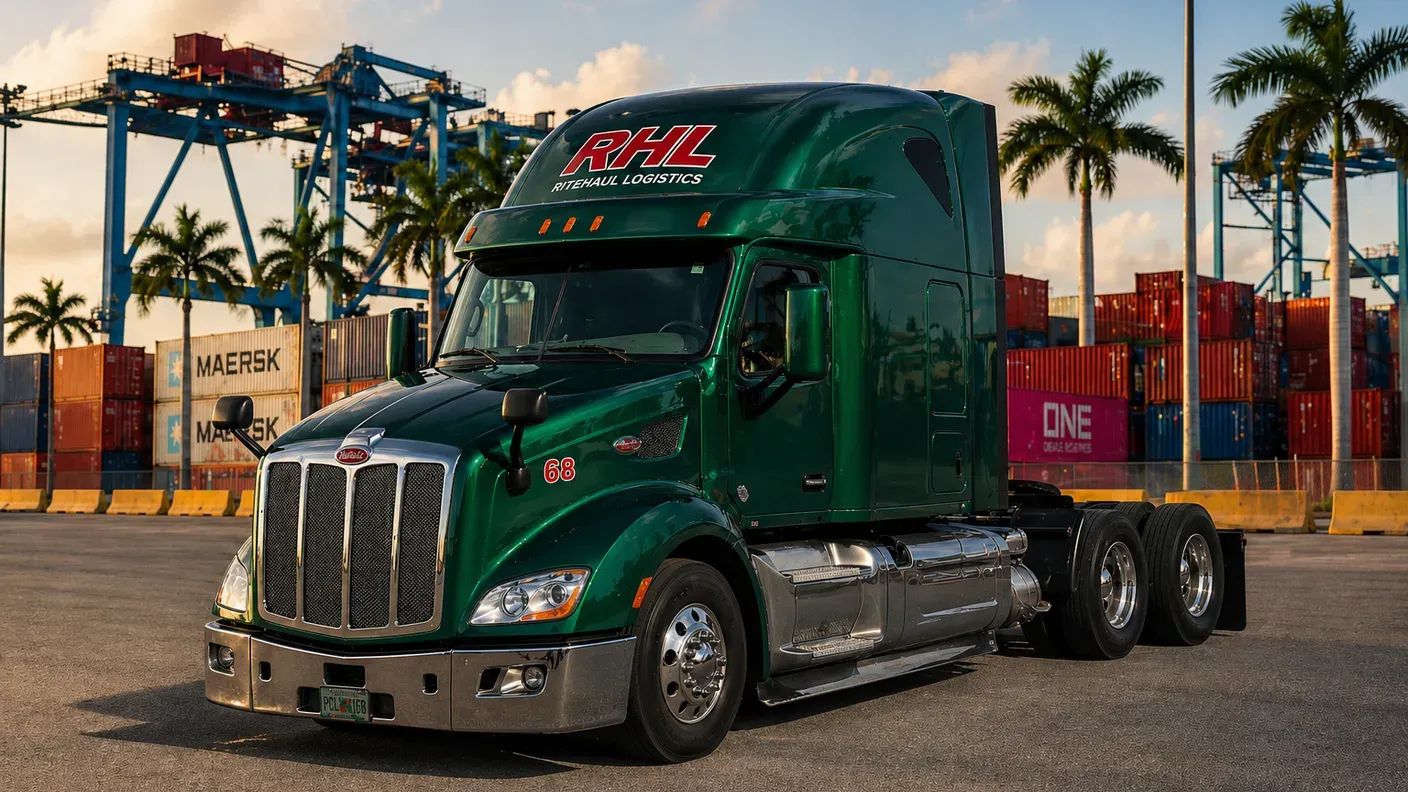
In practice, drayage moves are measured in tens of miles, not hundreds. A typical day for one of our drayage tractors might involve two or three loops between the Port of Miami or Port Everglades and a consignee in Doral, Medley, or Pompano Beach. The container stays sealed; the chassis stays under it; the goods stay inside.
What intermodal actually is
Intermodal, in the context of containerized freight, refers to a shipment that uses at least two modes of transportation — almost always ocean plus rail, with truck drayage on each end. The container itself is the constant. It is built to standard ISO dimensions so it can move between a ship, a rail well car, and a chassis without the cargo ever being touched.
A classic intermodal lane looks like this: a 40-foot box arrives at the Port of Los Angeles, a drayage carrier pulls it to a nearby intermodal yard, BNSF or Union Pacific moves it across the country to a Chicago or Memphis ramp, and a second drayage carrier hands it off to the consignee. The middle leg is rail, not truck, which is what makes it "intermodal" rather than "over-the-road."
So drayage is one leg. Intermodal is a whole journey that includes drayage on each end.
When drayage alone is the right answer
If your container is unloading at a port that is already close to your final destination, you do not need intermodal. You need drayage. Adding rail to a 30-mile move is not just unnecessary, it would extend transit by days and add intermodal lift charges that dwarf any fuel savings.
Drayage-only is the right answer when:
- Your warehouse or distribution center is within roughly 250 miles of the discharge port.
- Time matters. Same-day or next-day delivery off the ship is normally only possible by truck.
- The container needs to be returned to the same port empty and you want to keep per diem clean.
- You are running reefer or overweight loads where intermodal capacity is limited.
For most South Florida importers serving the South Florida market, this is the default. The cargo discharges at Port Miami or Port Everglades, and the consignee is typically in Miami-Dade, Broward, or Palm Beach county. Adding rail to that move makes no sense.
When intermodal earns its keep
Intermodal is the better choice when the inland portion of the move is long enough that rail's cost-per-mile advantage outweighs the time penalty. The general rule of thumb is anything over roughly 750 miles starts to favor rail, and anything over 1,000 miles is almost always cheaper by intermodal than by truck. Fuel surcharges, driver hours-of-service rules, and tractor utilization all push the math the same direction.
Intermodal also wins when:
- You have predictable, repeatable volume on a long lane and can build it into your forecasting cycle.
- The cargo is not perishable and can absorb an extra two to four days of transit.
- You want a hedge against trucking-capacity shocks. Rail capacity tends to be steadier than spot truck capacity during peak season.
- You care about emissions reporting. A double-stack train moves a ton of freight roughly four times further per gallon of diesel than a single tractor.
The catch is that intermodal effectively requires two drayage carriers — one at the origin port and one at the destination ramp. Either one can blow up your transit. A 96-hour rail move sandwiched between two reliable drayage legs is fast and cheap. The same move with a chassis shortage at the destination ramp can sit for a week.
A South Florida perspective
South Florida is an interesting case because intermodal is rarely the right answer for cargo that is staying in the region. The closest large intermodal ramps are in Jacksonville and central Florida. By the time a container has been drayed to Hialeah Yard or Winter Haven, loaded onto a train, moved north, lifted off, and drayed to a final mile, you have usually spent more time and money than a straight truck move would have cost.
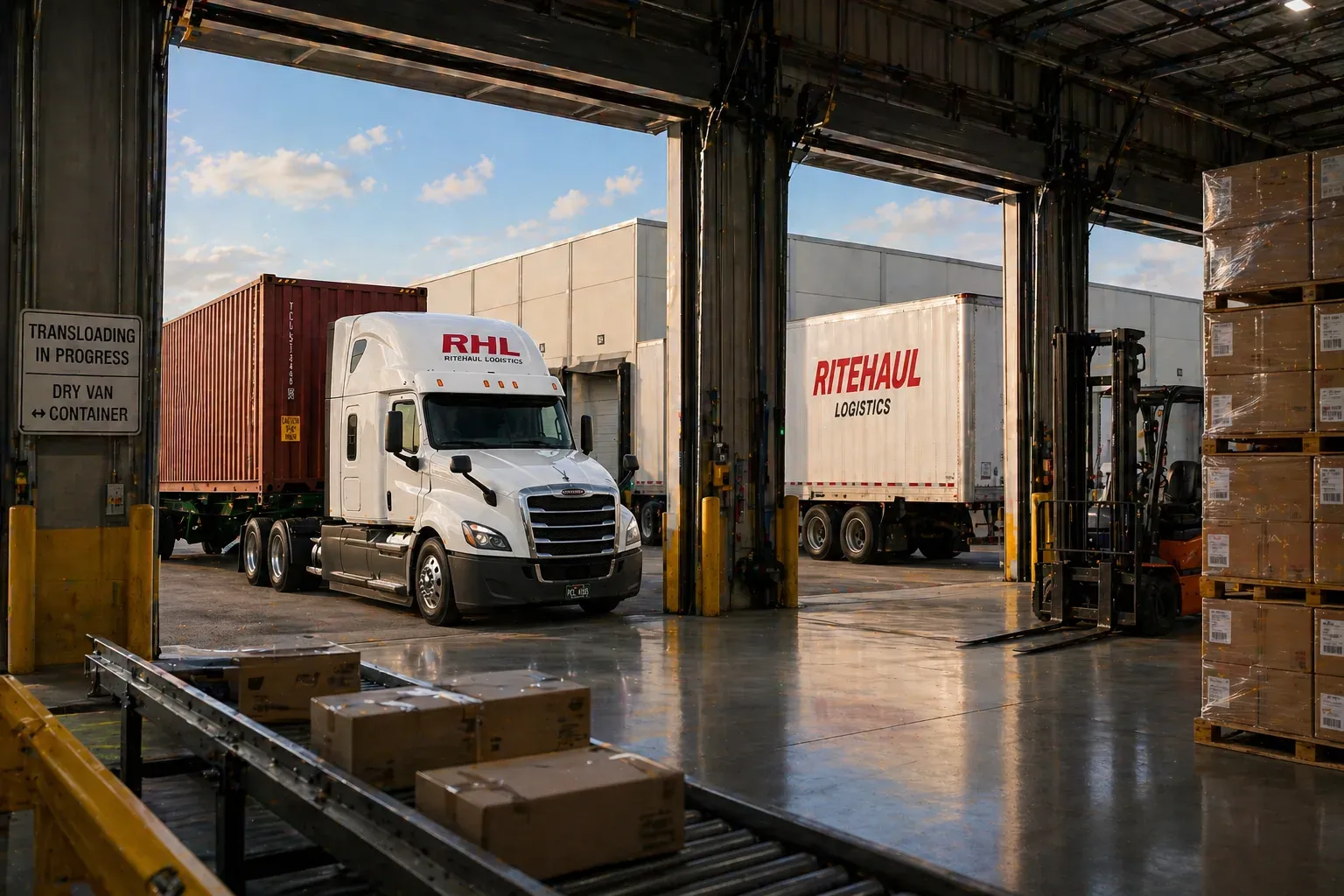
Where intermodal does come into the picture for South Florida shippers is on long outbound moves — say, a Miami-imported reefer of produce that needs to reach Chicago. There, the math can flip, and a transload from the ocean container into a domestic 53-foot container or a 53-foot dry van for an intermodal head-haul can cut both cost and chassis days.
That is also where transloading becomes part of the conversation, because moving cargo from a 40-foot ocean box into a 53-foot domestic box gives you roughly 30 percent more cube per move. We dig into that trade-off in our transloading article.
Combining the two on purpose
The best supply chains do not pick one or the other. They use drayage for short, time-sensitive port-to-door moves and reserve intermodal for long inland legs where rail's cost advantage compounds. The decision is made at the SKU and lane level, not at the company level.
A useful exercise: list your top 20 inbound lanes by volume, plot them by distance from the discharge port to the final mile, and overlay current spot truck rates against intermodal rates including both drayage legs. The lanes where intermodal is cheaper by more than 15 percent and the customer can tolerate the transit are your candidates to convert.
How to decide for your next container
Three quick questions will get you most of the way there:
- How far is the discharge port from the final destination? Under 250 miles, drayage. Over 750 miles, look hard at intermodal.
- How time-sensitive is the cargo? If a delay of two to four days will cost you more than the rate difference, stay on the truck.
- Do you have a reliable drayage partner on both ends? Intermodal is only as good as its weakest drayage leg. If you do not, the cost savings on paper will get eaten by accessorials and detention.
If your freight is moving in or out of South Florida and staying in the region, the answer is almost always drayage, and we are happy to quote it for you.
Need a quote on a specific lane?
Tell us your origin port, destination, and equipment type. We will price it within one business day.
Stay informed
Get the next article in your inbox
Port closures, congestion, rate trends, and capacity updates for Port Miami and Port Everglades — delivered when we publish.