If you have ever opened an invoice from a steamship line and seen a four-figure charge with a one-line explanation that just says "demurrage," you know the first lesson of this article. The second lesson is that the charge probably could have been avoided.
Demurrage and per diem are the two penalties that quietly do more damage to import margins than every other accessorial combined. They are not the same thing, they are not paid to the same party, and the rules are not always what the steamship line tells you. This is the version we wish every shipper got handed on day one.
The two charges, briefly
Demurrage is what the marine terminal charges you for leaving a container at the terminal past its allotted free time. It is paid to the steamship line, who in turn settles with the terminal. The clock starts when the container is "available for pickup" and runs until the container leaves the terminal gate.
Per diem is what the steamship line charges you for keeping the container itself out of their pool past its allotted free time after pickup. It is paid to the steamship line directly. The clock starts when the container leaves the terminal and runs until the empty is returned.
In short: demurrage is rent on the terminal slot. Per diem is rent on the container. Both meters can be running on the same shipment at different times, and on a bad week they can overlap.
Demurrage at the terminal
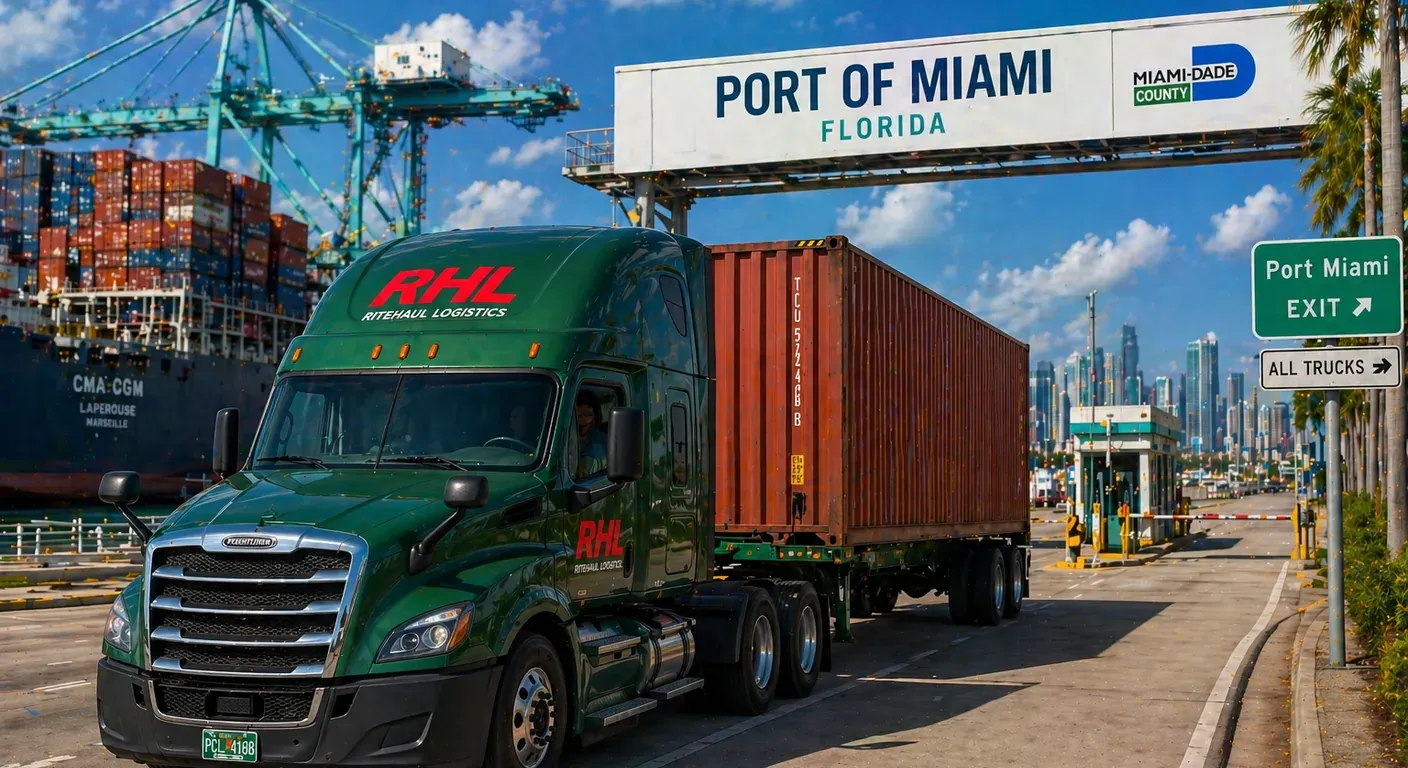
Most steamship lines at Port Miami and Port Everglades give you somewhere between three and five business days of free time after a container becomes available. After that, the daily rate kicks in — typically starting around $150 per day per container, then escalating into tiers that can hit $400 per day for containers that sit a week or more.
Three things make demurrage worse than it looks on paper:
- The clock starts on availability, not arrival. Just because the ship docked Sunday does not mean your container is available Sunday. The terminal still has to discharge it, and discharge can lag by 24 to 72 hours. Watch the "available" status, not the vessel ETA.
- Weekends often count. A few lines exclude weekends from free-time calculations, but most do not. A container that becomes available Friday at 5 PM and is picked up Monday at 9 AM has often already burned three days of free time.
- Holidays are inconsistent. Federal holidays, port-specific holidays, and steamship-line holidays do not always line up. The line that gave you Memorial Day free may charge for the day after Thanksgiving.
The defense is simple in concept and hard in practice: dispatch the pickup the moment the container is marked available, not the moment it is convenient. A good drayage partner is monitoring availability hour-by-hour and dispatching off the status feed, not off your email.
Per diem after pickup
Per diem starts the moment your driver leaves the terminal gate and ends the moment your driver returns the empty container. The free window is usually three to five days but can be as short as 48 hours during equipment shortages, and the daily rate is similar to demurrage — often $150 to $300 per day, escalating in tiers.
Per diem is more avoidable than demurrage, but only if your downstream operation is set up for it. The two big drivers of per diem charges are:
- Slow unloading at the consignee. Containers that sit on chassis at a warehouse for two extra days are containers that are bleeding $300 a day.
- Empty return appointment shortages. During tight weeks, the steamship line may close empty returns to a specific terminal, and you have to nurse the empty for an extra day or two waiting for the gate to reopen. The per diem clock keeps running.
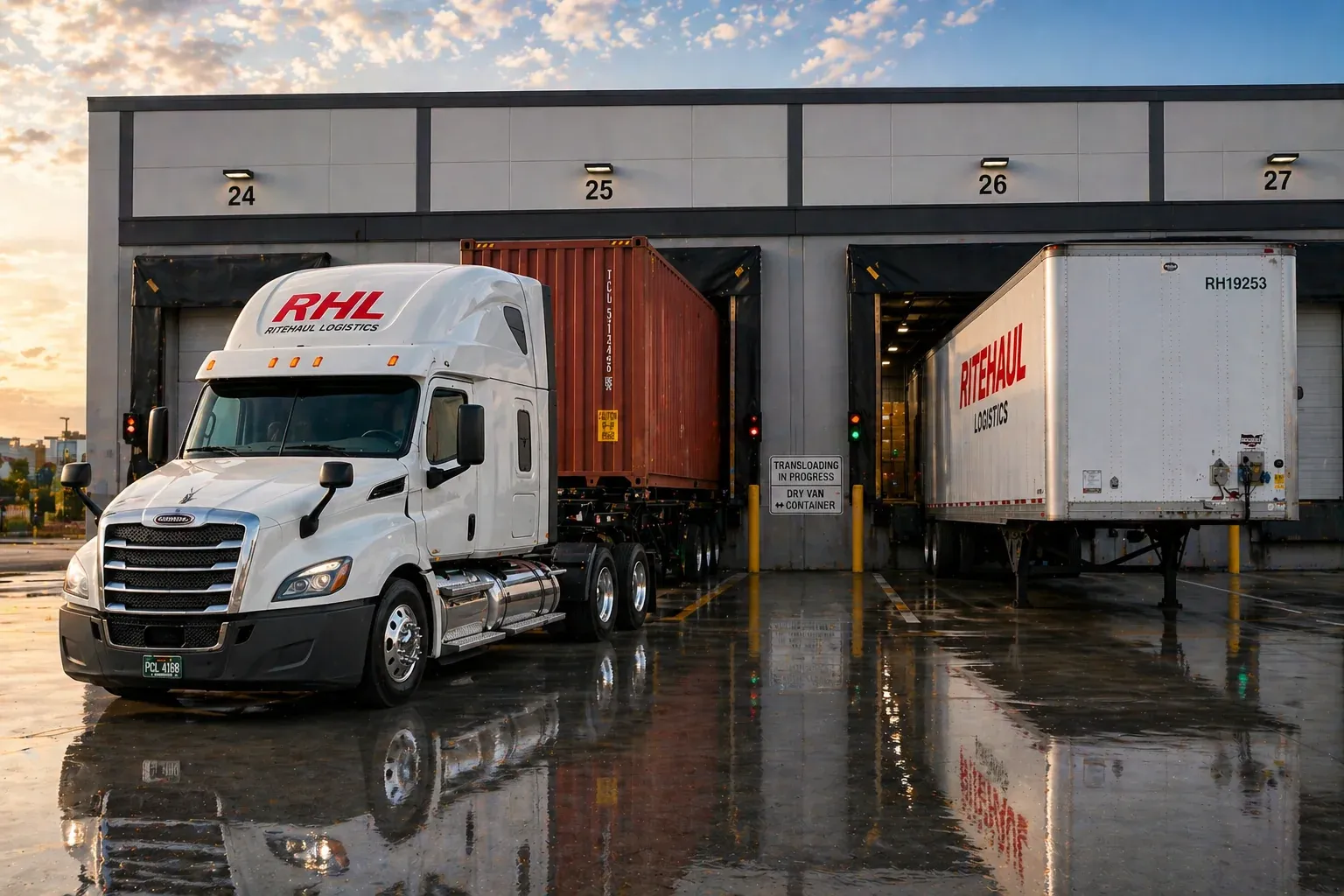
Both of these are exactly the case where transloading near the port is worth the labor charge. Get the cargo out, get the empty back to the pool the same day, and the meter stops.
Why the clock starts faster than you think
A consistent source of unexpected charges is the gap between when a container is "discharged" and when it is "available." A discharged container is one that has been physically lifted off the ship. An available container is one that has cleared all release holds — customs, the steamship line, the consignee — and is ready for the trucker to pick up.
Some shippers wait for an "available" notification before dispatching. By the time the notification reaches their inbox, the clock has often already been running for hours. Worse, some lines start the demurrage clock on discharge plus a fixed offset, regardless of whether release holds were resolved.
Two habits help:
- Treat the discharge timestamp as the start of the clock. Plan as if you have one less day than the line says you do.
- Resolve release holds before the ship docks. Customs entries, ISF, and bond paperwork should be filed early enough that the container is free of holds the moment it discharges. The hold that takes 24 hours to resolve is 24 hours of demurrage.
How to keep the meter low
A short list of habits that will save you four-figure charges over the course of a year:
- Pick the asset-based carrier. A carrier that owns its trucks and chassis can dispatch off availability without waiting for a third-party owner-operator to be available. Speed off the dock is the cheapest demurrage defense.
- Build a transload partner into your peak-season plan. Even if you usually ship straight to door, having a yard near the port to drop containers into during a surge is essential.
- Schedule unloading by container, not by day. A consignee who batches receiving "Tuesdays and Thursdays" is one storm-delayed vessel away from a per diem catastrophe.
- Track free-time exhaustion as a KPI. If you cannot tell which of your containers is on day three of free time and which is on day five, you cannot prioritize. A simple dashboard from your drayage partner closes that gap.
- Negotiate free time on your contract. Steamship lines will often grant additional free time on negotiated contracts. They will not offer it. Ask.
Free time, when it pauses, and disputes
Free time can be paused by certain events that are arguably outside the shipper's control — vessel delays, terminal closures, government inspections. The lines do not pause it automatically. You have to file a dispute with documentation, and the dispute window is typically short — often 30 days from invoice date.
Keep the documentation as you go. A timeline that shows the discharge time, the release time, the pickup time, the return time, and any hold-related delays will close most disputes in your favor. The same timeline filed three months later, after you have lost the email thread, will not.
If you want a partner that watches the clock for you, dispatches off availability, and runs the dispute documentation when something goes wrong, that is exactly what we built our drayage operation to do. Request a quote and we will show you how we would handle your top three lanes.
Need a quote on a specific lane?
Tell us your origin port, destination, and equipment type. We will price it within one business day.
Stay informed
Get the next article in your inbox
Port closures, congestion, rate trends, and capacity updates for Port Miami and Port Everglades — delivered when we publish.